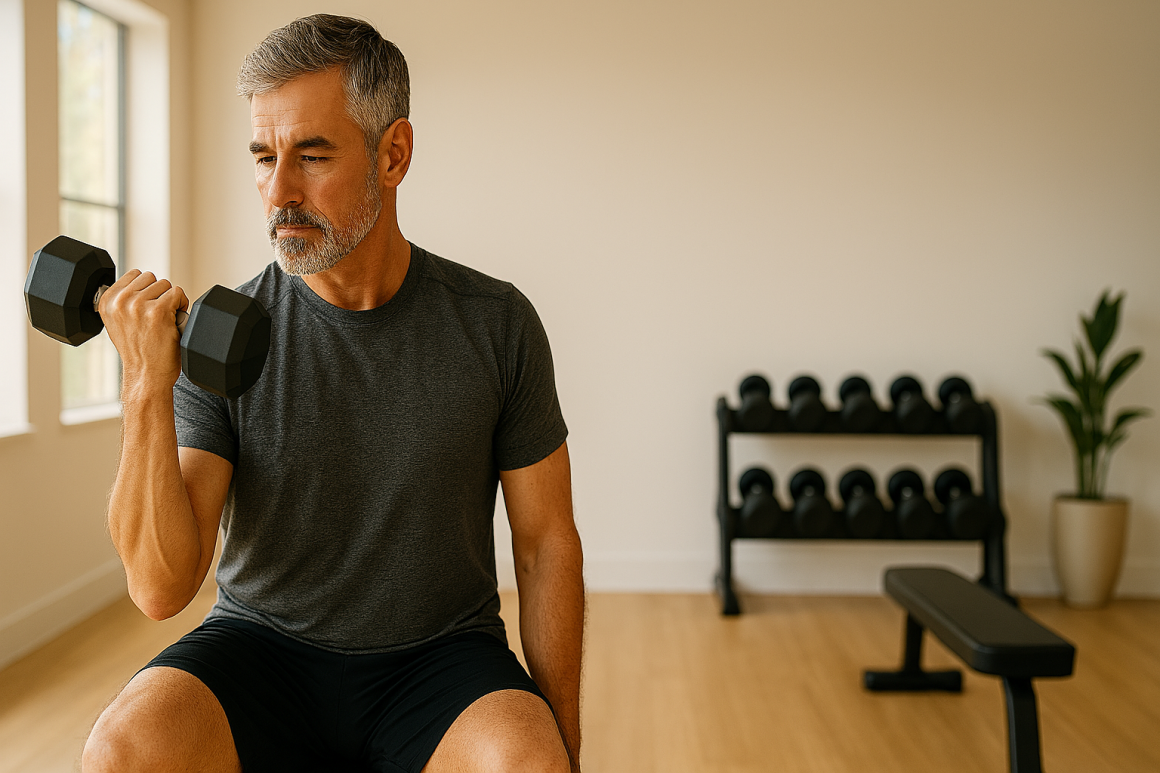
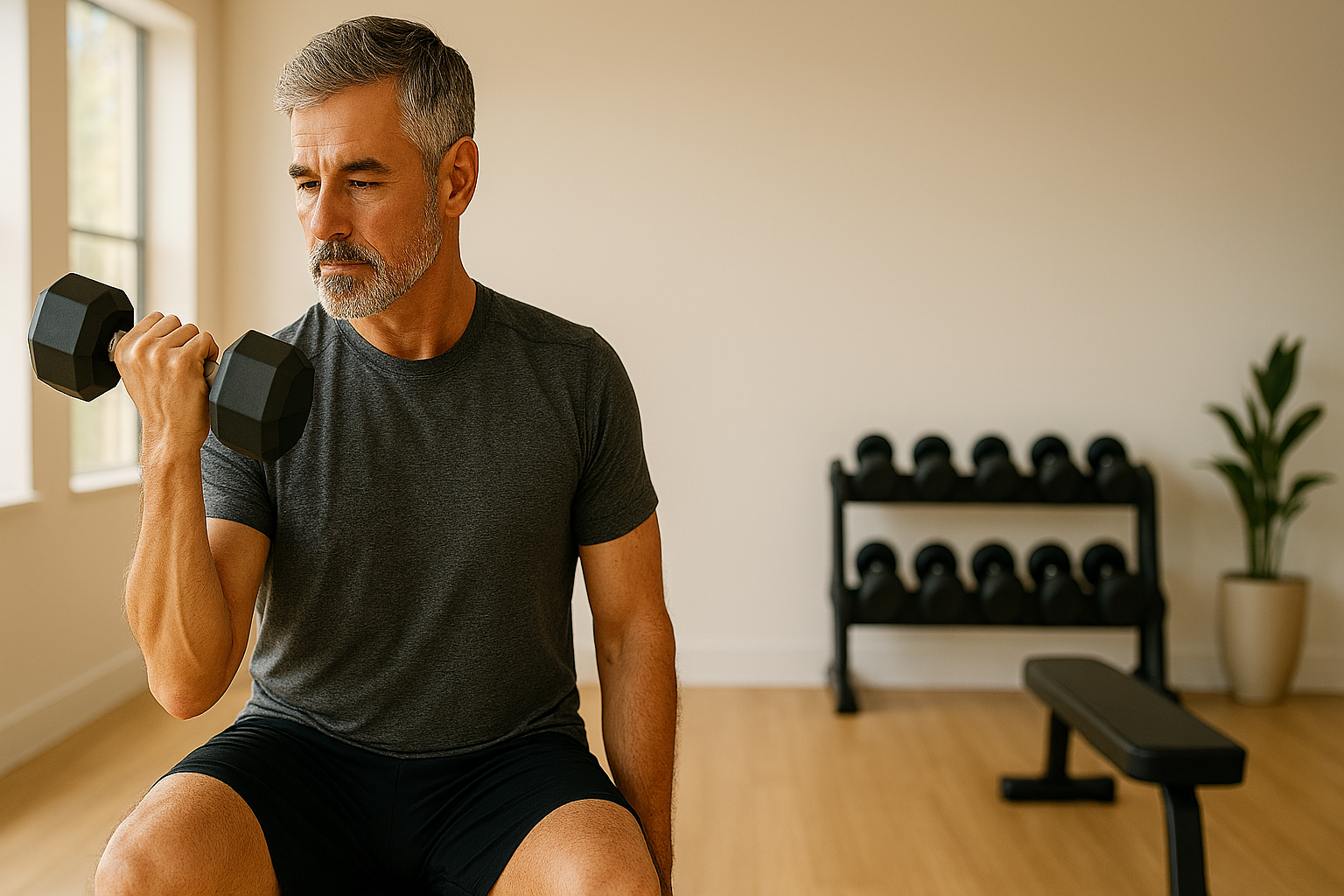
Fitness for men over 50 might seem challenging, but building muscle after 50 is absolutely possible. In fact, strength training becomes even more important as we age. Men over 50 who exercise regularly stay stronger, healthier, and more independent. This guide shows you how to build muscle safely with exercises designed for your body.
Whether you’re new to fitness or getting back into shape, you’ll learn proven strategies that work specifically for men over 50. We’ll focus on proper form, smart progression, and recovery techniques that help your body adapt without injury.
Why Fitness for Men Over 50 Matters Most
Your body changes after 50. Muscle naturally decreases, bones become less dense, and joints need more care. But here’s the good news: strength training stops these changes and even reverses them.
Regular fitness for men over 50 provides real benefits:
- Muscle preservation: You lose about 3% of muscle mass per year after 30. Strength training prevents this loss.
- Bone health: Exercise strengthens bones and reduces fracture risk.
- Metabolism boost: Muscle tissue burns more calories at rest, helping you maintain a healthy weight.
- Independence: Staying strong means you can carry groceries, play with grandkids, and live without limitations.
- Mental health: Exercise improves mood, reduces anxiety, and sharpens mental focus.
- Longevity: Active men live longer and healthier lives.
The best part? You don’t need extreme workouts. Consistent, smart training works better than intense efforts.
Key Benefits of Strength Training After 50
Strength training isn’t just about looking good. It transforms how you feel and live every day.
Practical Strength for Daily Life
Real-world strength means you can lift heavy bags, climb stairs easily, and stay balanced. These abilities keep you independent as you age. Studies from the Mayo Clinic on strength training for adults show that regular exercise improves daily function and quality of life.
Heart Health and Circulation
Strength training strengthens your heart and improves blood circulation. According to American Heart Association guidelines, resistance exercise is essential for cardiovascular health at any age.
Energy and Endurance
Building muscle increases energy levels. You’ll feel less tired during the day and sleep better at night. More muscle means your body works more efficiently.
Joint and Bone Protection
Proper strength training actually protects your joints. Strong muscles support your joints and reduce pain. The NIH on physical activity for older adults confirms that exercise is the best defense against age-related bone loss.
Safe Form and Technique for Fitness for Men Over 50
Proper form is the most important part of strength training for men over 50. Good form prevents injury and ensures your muscles work effectively. Bad form can damage joints and waste your time.
Core Principles of Proper Form
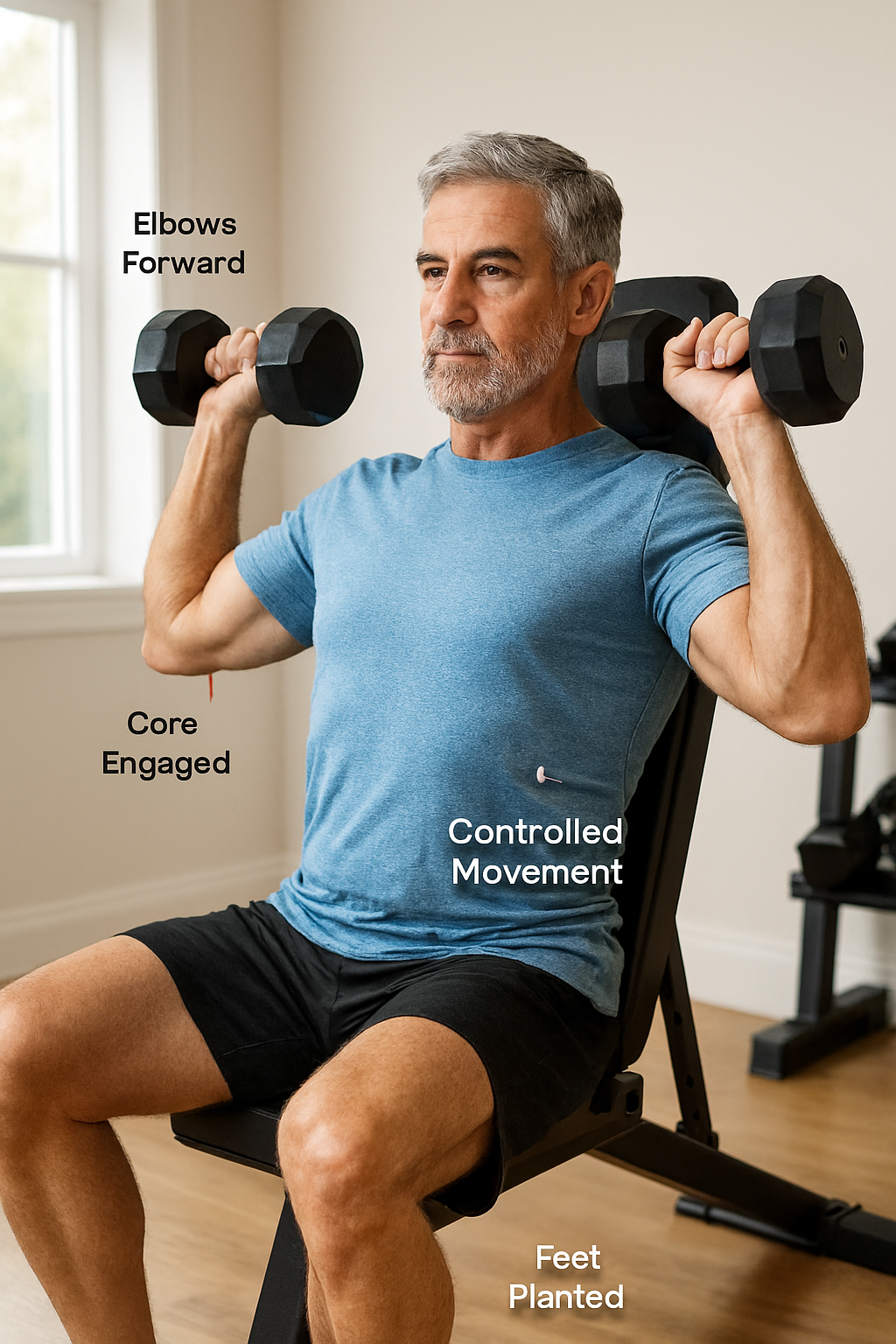
- Control: Move slowly and deliberately. Never jerk or bounce weights.
- Full range of motion: Move through the complete movement, but don’t lock out joints.
- Stable posture: Keep your spine aligned and core engaged.
- Proper breathing: Breathe out during effort, breathe in during the easier part of the movement.
- Gradual progression: Increase weight only when proper form feels easy.
Why Joint Health Matters
Your joints are sensitive after 50. Improper form stresses joints and causes pain. Proper form keeps joints healthy. Always move through a comfortable range of motion and stop if any movement causes sharp pain.
The Cleveland Clinic on proper exercise form emphasizes that correct technique is more important than heavy weight for long-term success.
Upper Body Strength Exercises for Men Over 50
Upper body strength keeps you functional and confident. Build chest, shoulder, and arm strength with these exercises.
Dumbbell Bench Press
The dumbbell bench press builds chest strength safely. It’s easier on joints than barbells and lets each side work independently.
How to do it:
- Lie flat on a weight bench with feet on the floor.
- Hold dumbbells at chest height with elbows at about 45 degrees from your body.
- Press the dumbbells up and forward in a controlled motion.
- Keep a slight bend in your elbows at the top (don’t lock them out).
- Lower the weights back to chest level slowly.
- Do 2-3 sets of 8-12 repetitions.
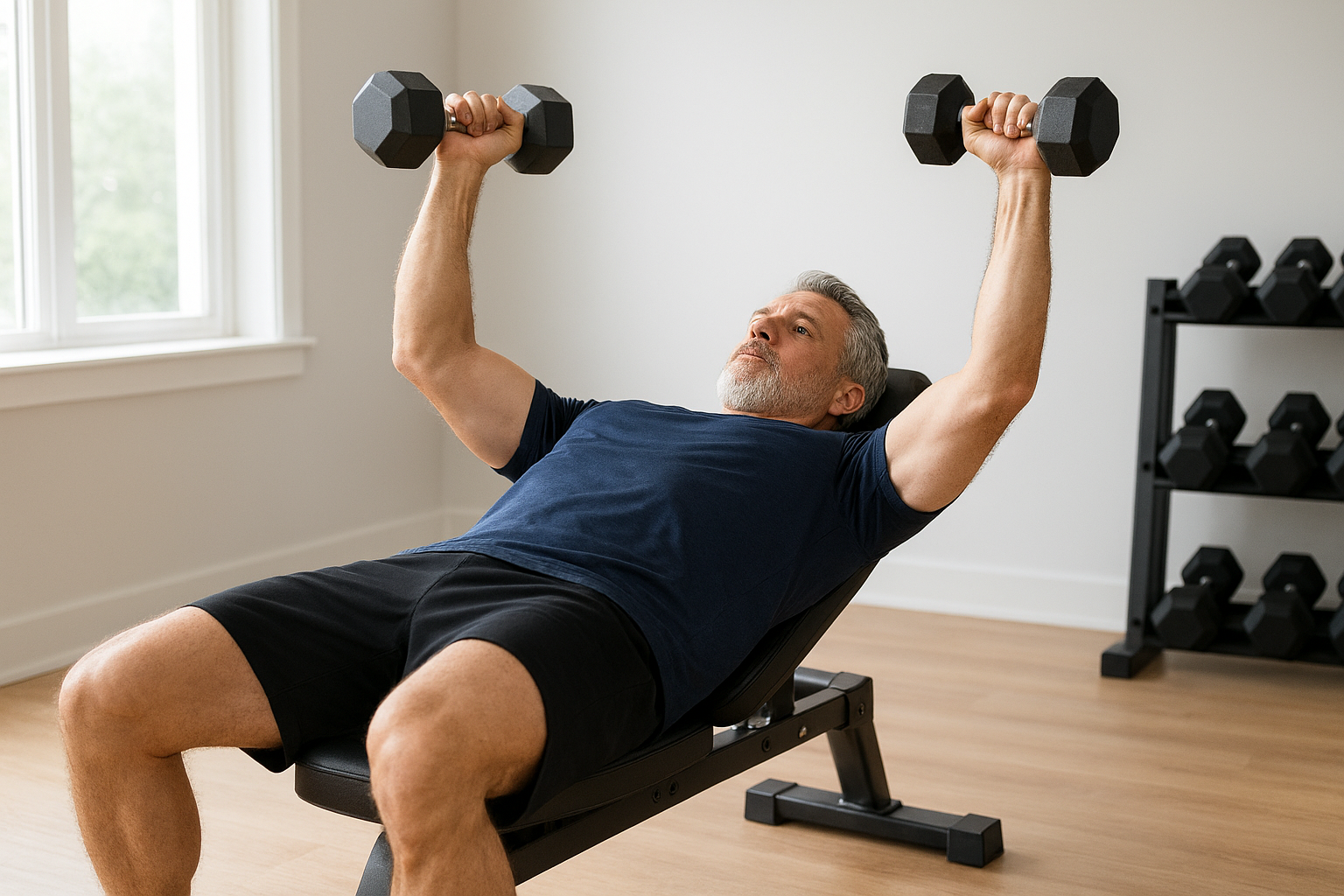
Tip: Start with lighter weight and focus on form. As form improves, gradually increase weight over weeks, not days.
Dumbbell Shoulder Press
Shoulder strength helps with lifting and overhead movements. The seated shoulder press is safer than standing versions.
How to do it:
- Sit on a bench angled at about 75-80 degrees.
- Hold dumbbells at shoulder height with elbows slightly forward.
- Press straight up and slightly forward.
- Lower back to shoulder height with control.
- Do 2-3 sets of 8-12 repetitions.
Tip: Keep feet planted for stability. Press the dumbbells in line with your shoulder, not behind your head.
Dumbbell Rows
Rows balance chest exercises and prevent shoulder problems. They build back strength too.
How to do it:
- Lean slightly forward while standing or sitting on a bench edge.
- Hold dumbbells at your sides with arms straight.
- Pull the dumbbells up toward your hips, keeping elbows close to your body.
- Squeeze your shoulder blades together at the top.
- Lower slowly back to starting position.
- Do 2-3 sets of 8-12 repetitions.
These three exercises build complete upper body strength for men over 50.
Lower Body Strength (With Modifications)
Strong legs keep you independent. You need leg strength to climb stairs, get up from chairs, and stay balanced. The good news: leg exercises can be modified for comfort and safety.
Assisted Squats with Hand Support
Squats build leg strength without heavy impact. Using light hand support makes them safer and more achievable for men over 50.
How to do it:
- Stand facing a sturdy object like a power rack or sturdy chair.
- Lightly touch the support with your hands for balance (use minimal hand pressure).
- Lower your body by bending knees and hips, keeping your chest upright.
- Go as low as comfortable without your knees extending past your toes.
- Push through your heels to stand back up.
- Do 2-3 sets of 8-12 repetitions.
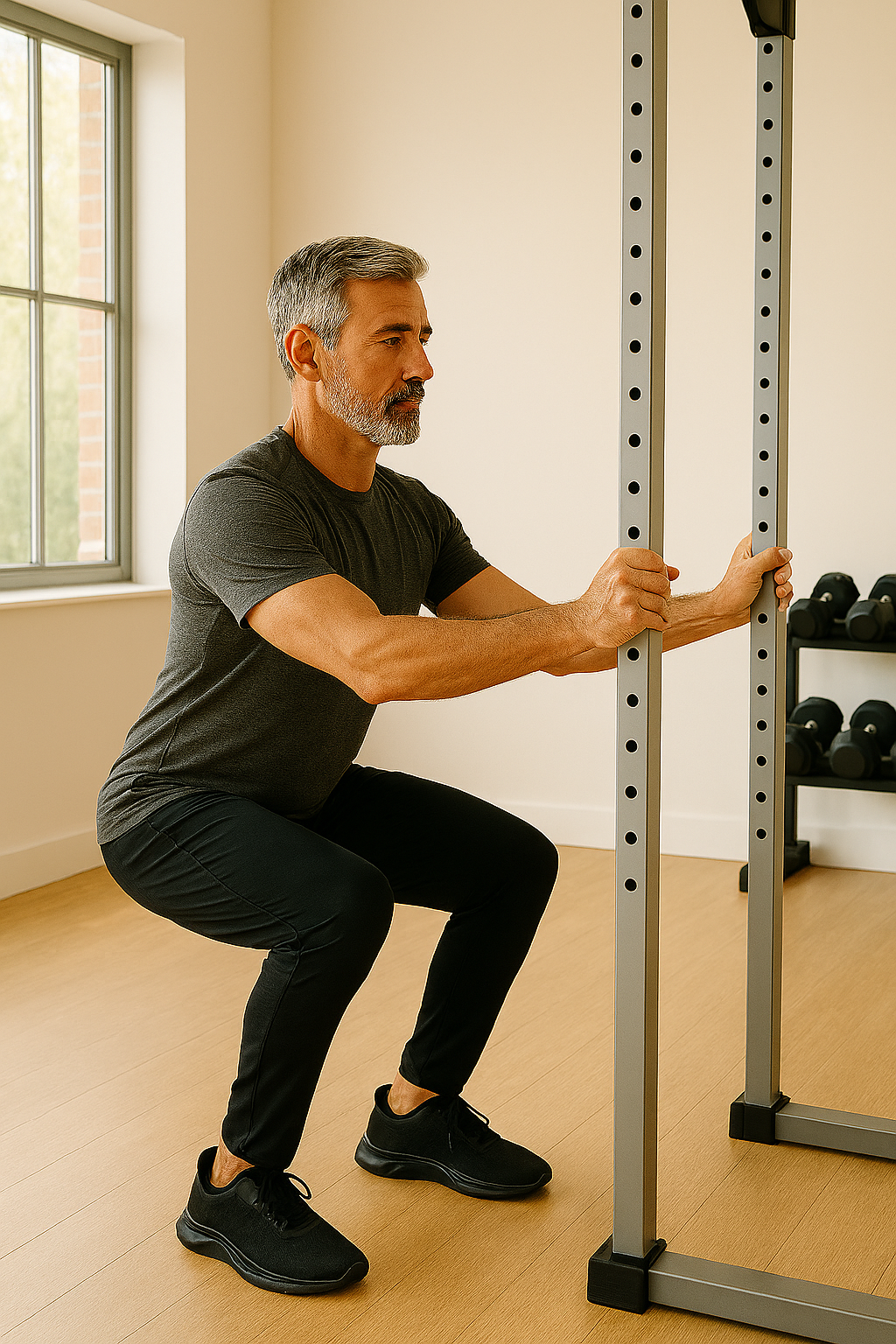
Tip: The hand support is for balance only, not to lift your body weight. Gradually reduce hand support as you get stronger.
Dumbbell Lunges (Modified)
Lunges build single-leg strength and balance. They help prevent falls in daily life.
How to do it:
- Stand holding light dumbbells at your sides.
- Step forward with one leg, lowering your body until both knees bend at about 90 degrees.
- Keep your back leg’s heel off the ground.
- Push back to starting position.
- Alternate legs for 2-3 sets of 8 lunges per leg.
Tip: Keep your torso upright. If balance is difficult, hold onto a wall or chair.
Leg Press Alternative: Seated Leg Exercises
If lunges or squats feel uncomfortable, try seated leg exercises. Sit on a sturdy chair and straighten one leg out in front, hold for 2 seconds, then lower. This safely builds leg strength.
Recovery and Flexibility
Recovery is where muscle growth happens. Many men over 50 ignore recovery and miss out on results. Smart recovery is just as important as the workout itself.
Why Recovery Matters
Your muscles don’t grow during exercise. They grow during rest. Without proper recovery, you stay sore and don’t see results. Recovery also prevents injury and keeps your body healthy long-term.
Post-Workout Stretching
Stretching after every workout maintains flexibility and reduces soreness. Hold each stretch for 30 seconds without bouncing.
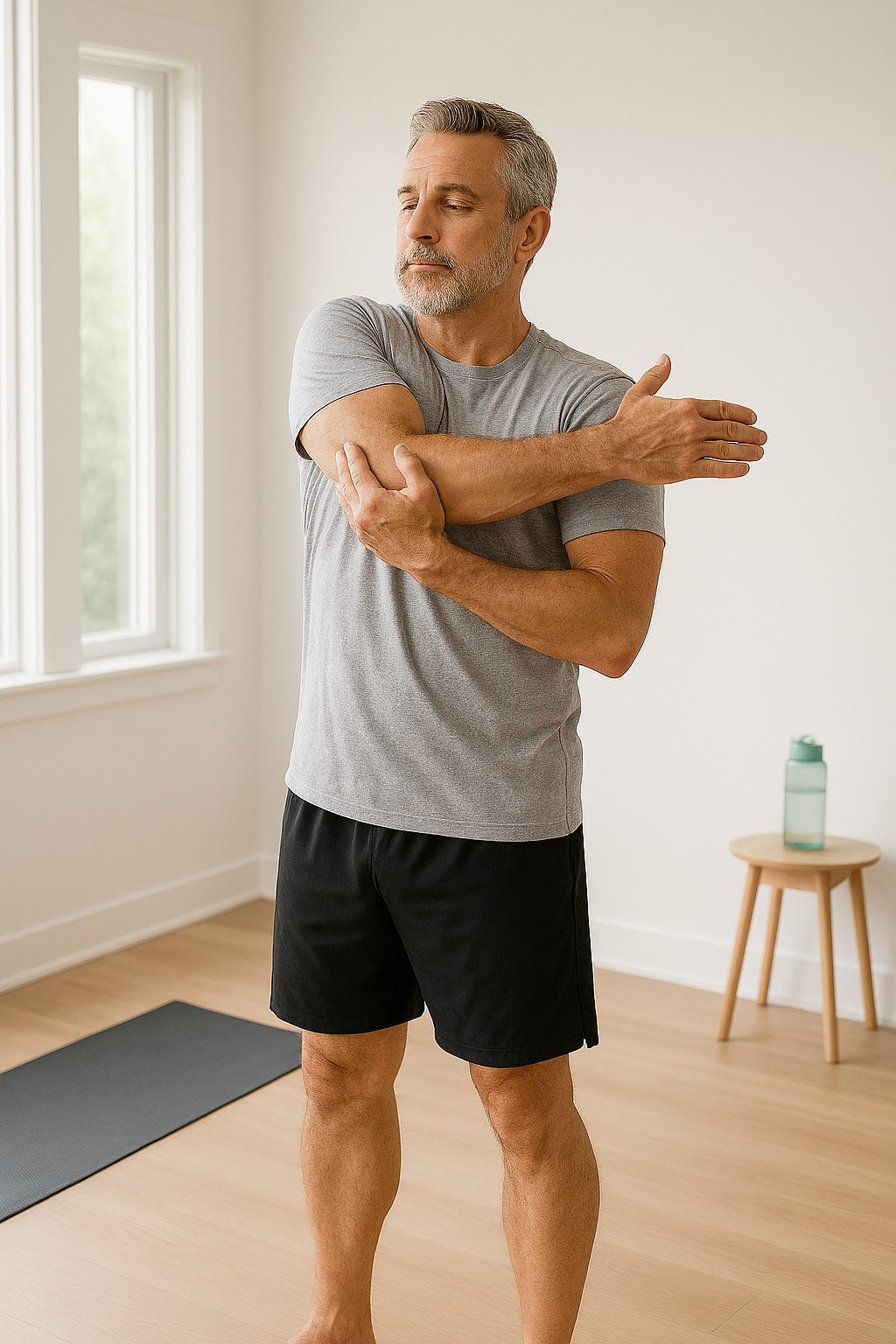
Essential post-workout stretches:
- Chest stretch: Pull one arm across your chest and hold 30 seconds.
- Shoulder stretch: Reach one arm overhead and gently pull the elbow back.
- Hamstring stretch: Gently fold forward and hold your shins or thighs.
- Quad stretch: Stand on one leg and gently pull your other foot toward your glute.
Rest Days are Important
Rest at least one full day between strength training sessions. Your muscles repair and grow on rest days. Aim for 2-3 strength training days per week with rest days between them.
Sleep for Recovery
Sleep is when your body does most of its repair work. Aim for 7-9 hours per night. Good sleep speeds muscle growth and improves overall health. Poor sleep reduces recovery and makes workouts less effective.
Nutrition Supports Recovery
Eat enough protein to build muscle. Aim for about 1 gram of protein per pound of body weight daily. Good protein sources include chicken, fish, eggs, beans, and dairy. Also eat plenty of vegetables and whole grains for energy and nutrients.
Common Mistakes to Avoid
Learning from others’ mistakes saves you time and frustration. Here are common errors men over 50 make:
Mistake 1: Lifting Too Heavy, Too Fast
The biggest mistake is using too much weight. Heavy weight with poor form causes injury. Light weight with perfect form builds strength and prevents pain. Start light and slowly increase weight.
Mistake 2: Skipping Warm-Ups
Always warm up for 5-10 minutes before lifting. Light cardio and dynamic stretching prepare your body for exercise and prevent injury.
Mistake 3: Ignoring Joint Pain
Sharp joint pain means something is wrong. Stop the exercise immediately. Muscle soreness is normal and okay. Joint pain is a warning sign. Listen to your body.
Mistake 4: Not Eating Enough
You can’t build muscle if you don’t eat enough. Eating too little limits muscle growth and makes recovery harder. Eat regular, balanced meals with protein at each one.
Mistake 5: Skipping Recovery Days
Training every day prevents recovery and causes burnout. Your body needs rest to get stronger. Rest days are when growth happens.
Mistake 6: Poor Form for Ego
Using heavier weight with bad form feels good for the ego but doesn’t work muscles correctly. It wastes your time and risks injury. Perfect form with lighter weight always wins.
Q: What exercises are best for men over 50?
A: The best exercises are ones you can do with proper form. Moreover, focus on multi-joint movements like squats, presses, and rows. Additionally, these work multiple muscles and deliver quick results. Furthermore, start with 2-3 sets of 8-12 repetitions, 2-3 times per week. The ACSM strength training guidelines recommend this approach for optimal strength building.
Q: How often should men over 50 do strength training?
A: Train 2-3 times per week with at least one rest day between sessions. Moreover, this frequency builds muscle while allowing recovery. Additionally, avoid training the same muscles on consecutive days. Furthermore, consistency beats intensity for men over 50.
Q: Is it safe to lift weights after 50?
A: Yes, with proper form and medical clearance. Moreover, always consult your doctor before beginning any new exercise program. Additionally, start with light weights and focus on proper technique. Furthermore, progress gradually as weight training at any age requires good form and smart progression.
Q: How can I avoid injury while strength training?
A: Prevent injuries by warming up properly and using correct form. Moreover, start with lighter weights and listen to your body. Additionally, include recovery stretches and progress gradually. Furthermore, never sacrifice form for heavier weight and include rest days in your program.
Q: What’s the difference between muscle building and endurance training?
A: Muscle building uses heavier weights with fewer repetitions (8-12 reps), usually 2-3 sets. Moreover, endurance training uses lighter weights with more repetitions (15+ reps). Additionally, both are important for overall fitness. Furthermore, men over 50 benefit most from emphasizing muscle building which preserves strength as you age.
Start Your Strength Training Journey Today
Building muscle after 50 is absolutely possible. Thousands of men transform their bodies and their lives every year through consistent strength training.
The key is starting smart and staying consistent:
- Start with light weights and perfect form
- Train 2-3 times per week with rest days between
- Focus on safe, controlled movements
- Eat enough protein and sleep well
- Progress gradually as you get stronger
- Stretch and recover properly
You don’t need extreme workouts or fancy equipment. Simple, consistent training with proper form delivers results. Your future self will thank you for starting today.
Remember: The best workout program is the one you’ll actually do. Start where you are, use what you have, and do what you can. Progress comes from consistency, not perfection.
Related Articles
- As you progress past 50, many of these principles apply to fitness for seniors over 65
- If you have joint concerns, low-impact exercises can be an excellent alternative
- Not ready for the gym? Try home workout routines that require minimal equipment
Medical Disclaimer
Important: This article is for educational purposes only and is not medical advice. Always consult with a healthcare professional before starting any new exercise program, especially if you have existing health conditions, take medications, or haven’t exercised regularly. Your doctor can ensure that strength training is safe for your specific situation.
If you experience sharp pain, chest discomfort, dizziness, or shortness of breath during exercise, stop immediately and seek medical attention.